
Pride, Wounds, and the Church We Are Called to Build
There are wounds the Church gives that do not heal quickly. They follow a person into adulthood. They sit beside him in prayer. They rise when an old hymn begins, or when Scripture is read in a voice that sounds too much like the ones that once condemned him. They are not proof that God is absent. They are proof that the soul remembers.
I know those wounds.
I entered the Pentecostal tradition when I was thirteen years old. That world formed me in ways I still honor. It taught me to pray with expectation. It taught me that worship should not be dead. It taught me that the Holy Spirit was not a doctrine locked in the past, but the living breath of God moving through the Church. It gave me Scripture, testimony, altar calls, fire, and the conviction that God still speaks.
Those gifts stayed with me. So did the harm.
At eighteen, I went to Bible college. I was young, sincere, and trying to follow the call of God as best I understood it. That season came to an abrupt close when it was revealed that I am a gay man. I was not held as a whole person trying to understand faith, vocation, and truth. I was treated as a problem to be solved. The tradition that taught me to seek God did not know how to receive me when I told the truth about myself.
That kind of rejection does something deep.
To be told God loves you while being taught that your honesty makes you unsafe creates a split in the soul. You learn to pray with one hand and cover yourself with the other. You learn to love the altar and fear the people around it. You learn to hunger for God while wondering if the Church will ever stop asking you to bleed for being truthful.
That is religious trauma. Not because faith itself is trauma. Faith is not the wound. Christ is not the wound. The wound comes when faith is handled without love, when Scripture is turned into a weapon, when holiness is confused with control, and when a young person is taught that belonging to God requires disappearing from himself.
For many LGBTQIA+ people, this story is painfully familiar. Many of us did not leave faith because we stopped longing for God. Many left because the places that claimed to represent God became unsafe for our bodies, our families, our questions, and our truth. When Pew Research Center reports that a majority of LGBT adults in the United States, fifty-two percent, are religiously unaffiliated, double the rate of everyone else, the Church should not read that as indifference. It should read it as testimony. It should ask what kind of witness made so many people feel that survival required distance.
But a statistic is not the whole soul behind it. Departure is not the same as forgetting, and absence is not the same as unbelief. The story is not only one of leaving.
The Williams Institute has found that more than five million LGBT adults in the United States, nearly half, remain religious in some meaningful way. That matters. It means the hunger has not disappeared. It means many LGBTQIA+ people still reach for prayer, ritual, sacred memory, moral language, and community. They may have left institutions, but many have not stopped reaching for God.
That was true for me.
At twenty-one, I found a gay Pentecostal church. I do not say that lightly. For me, that was not a minor discovery. It was a door opening. It was proof that the Spirit had not left me. It was proof that Pentecost did not belong only to those who had used it against me. In that community, I began the hard work of reconciliation.
Not reconciliation with the harm. Harm does not need to be excused.
I mean reconciliation between my faith and my sexuality. Between the fire of the Spirit and the truth of my life. Between the boy who loved the altar and the young man who had been told there was no place for him there.
That season mattered because I needed to know that my love did not cancel my calling. I needed to know that my body was not a mistake. I needed to know that my prayers had not been invalidated by my honesty. I needed to know that Christ had not turned his face away from me.
Still, healing rarely moves in a straight line. Once the first layer of fear begins to loosen, deeper questions often rise. Mine did.
By my early twenties, I entered a season of faith deconstruction. Around twenty-three to twenty-five, I found myself among Anglicans, drawn by liturgy, order, and sacrament. Anglicanism gave me room to breathe. It gave me prayers older than my pain. It gave me a table, a calendar, and a way of worship that did not depend on emotional intensity alone. After years of spiritual volatility, there was mercy in the rhythm.
That rhythm steadied me, but it did not answer everything.
I was not looking for novelty. I was looking for fullness. I had seen the thin spirituality of much of Emergent Christianity. I understood its protest. I understood why people were tired of shallow certainty and institutional arrogance. But too often, it seemed to know what it was leaving better than what it was building. It questioned structures, but did not always form people. It challenged old answers, but sometimes replaced them with uncertainty that lacked sacramental depth.
At the same time, I saw the lack of affirming jurisdictions that carried a broader catholic spirit. Some communities were inclusive but liturgically thin. Some were sacramental but narrow. Some loved tradition but seemed afraid of the people Christ kept sending to their doors. Some had beautiful vestments and empty welcome. Some had open language but little rootedness.
I needed something more whole. Convergent Catholicism was born, in part, from that ache.
It was not created as a branding exercise. It was not an attempt to be different for the sake of being different. It came from the conviction that the Church does not have to choose between being affirming, sacramental, evangelical, and charismatic. Those streams are not enemies. They belong together when Christ is at the center.
Ancient faith and living Spirit belong together. Scripture and sacrament belong together. Reverent worship and radical welcome belong together. The old faith of the Church and the real lives of wounded people belong together.
LGBTQIA+ people do not need a side chapel in someone else’s Church. We need a home. We need altars where we are not tolerated as exceptions, but received as beloved members of the Body of Christ. We need communities where our gifts are discerned, our vocations honored, our families blessed, and our lives seen as places where grace is already at work.
This is why Pride matters to me.
Pride is not arrogance. Pride is survival with memory. Pride is the refusal to let shame have the final word. Pride is what happens when people who were told to disappear stand in the light and say, “God made us, Christ loves us, and the Spirit still moves through us.”
For LGBTQIA+ Christians, Pride is not separate from faith. It becomes testimony. It says the closet is not a sacrament. Silence is not holiness. Self-hatred is not repentance. The Gospel does not demand that we lie in order to be loved.
That testimony is not only personal for me now. It is also paternal.
I have been with Bryan since 2012. We have been married since 2014. In 2024, we adopted our two children. Fatherhood has changed the way I carry all of this. The wound is no longer only about what happened to me. The mission is now about the world my children will inherit.
In some ways, the world they are growing up in is safer than the one I knew. There is more language now. There are more visible families like ours. There are more communities willing to say openly what many of us once had to whisper.
In other ways, the world is more perilous. Old fears have found new platforms. The dignity of LGBTQIA+ people is still debated as though our lives are abstractions instead of sacred human realities. Children are still watching adults argue over whether families like theirs deserve peace.
Bryan and I are raising our children as Convergent Catholics.
That matters to me. We are not raising them in a faith that teaches them to despise their family. We are not raising them with a spirituality so thin it cannot carry grief, history, or mystery. We are raising them in a tradition that honors the sacraments, listens for the Spirit, welcomes the stranger, and refuses to separate holiness from mercy.
We are raising them to know that the Church is not only the place that hurt their father. It is also the place where grace fed him, healed him, called him, and sent him.
This is where the future of the Church must be faced with honesty.
Many LGBTQIA+ people are not looking for vague spirituality. We have already lived through emotional religion without depth. We have sat under sermons that shook the room but did not heal the heart. We have watched communities claim the Spirit while crushing the vulnerable.
What we hunger for is not performance. We hunger for substance. We hunger for ritual that carries grief. We hunger for sacraments that touch the body and tell the truth. We hunger for prayers that have survived centuries because they know what human beings are.
Vigils, commemorations, the public rituals of Pride, communal acts of blessing. These remind us that ritual still matters. Bodies still matter. Candles, hymns, water, oil, bread, wine, procession, and touch still speak a language the soul understands.
That is where Convergent Catholicism speaks with force.
We do not offer a faith stripped down to sentiment. We do not offer vague affirmation without formation. We offer the altar. We offer the font. We offer oil for healing. We offer confession without humiliation. We offer Scripture read through Christ. We offer the saints as companions. We offer the Spirit not as spectacle, but as fire, breath, and courage.
We offer a Church where the ancient and the living meet. We offer a Church where the wounded are not treated as problems to manage, but as members of Christ’s own body.
That kind of Church does not appear by accident. It has to be planted.
We need missions where there are none. We need communities in rented chapels, living rooms, storefronts, borrowed sanctuaries, and online spaces that lead toward embodied worship. We need small altars raised in cities where LGBTQIA+ people have been told there is no room for them. We need priests and deacons who bless without condescension, teach without fear, and pastor without control. We need lay leaders who understand that mission begins before property, before programs, and before perfect conditions.
Mission begins when someone says, “There are people here who need a table, and we will set one.”
This is the call of Pride for us as Convergent Catholics.
Not only to celebrate, though we should celebrate.
Not only to remember, though we must remember.
Not only to resist, though resistance is sometimes holy.
The call is to build.
Build communities where young queer people do not have to choose between Jesus and the truth.
Build churches where elders who survived rejection finally rest.
Build missions where trans and nonbinary people hear their names spoken with reverence.
Build altars where gay couples receive blessing without apology.
Build a Communion where children in families like mine see no contradiction between the love in their home and the love proclaimed at the altar.
Build a Church where the gifts of Pentecost, the beauty of Catholic worship, the authority of Scripture, and the demands of justice are held together in one living faith.
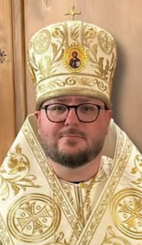
I am a gay man. I am a husband. I am a father. I am a bishop. I am a Christian.
I am not a contradiction.
I carry Pentecostal fire, Anglican rhythm, Catholic sacrament, and the hard-won faith of someone who had to wrestle for every inch of belonging. I do not write these things as theory. I write them as testimony.
The Church wounded many of us. But Christ did not. The Church rejected many of us. But the Spirit kept speaking. The Church told many of us there was no place. So now, by grace, we build one.
If there is no Convergent Catholic mission near you, perhaps that absence is not the end of the story. Perhaps it is the beginning of your calling. Perhaps the wound you carry is not only something to survive, but something God can transfigure into shelter for someone else.
Pride reminds us that visibility matters. The Gospel reminds us that visibility must become incarnation.
So let us be seen. Let us pray. Let us gather. Let us plant. Let us build.
And let every person who was told they were too queer for the Church and too Christian for the world hear this with clarity:
There is room at the table. There is work to do. There is a mission to plant. There is a Church to become.


Comments