
Built Into a Dwelling Place
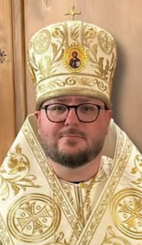
The following if the text of the homily delivered by His Beatitude John Gregory during the final Divine Liturgy of the General Assembly of the Convergent Catholic Communion in July 2026. Prior to this Divine Liturgy, the Moderator and Secretary announced that His Beatitude had been elected to another term as the Primus of our Communion.
-------------------------------------------------------------------------------------------------------------------------
Beloved in Christ, today we stand in a holy kind of tension.
This is the closing Divine Liturgy of our General Assembly. Some of you have traveled to be here as clergy of the Convergent Catholic Communion. Some of you are Communion Partners. Some of you are local parishioners of Holy Wisdom. Some of you are visitors who walked in this afternoon and found yourself in the middle of a family moment.
Welcome. At the beginning of this service I was proclaimed Primus of this Communion for another eight years. I receive that with gratitude. I receive it with sobriety. And I receive it knowing this one thing clearly. The Church does not belong to me. The altar does not belong to me. This Communion does not belong to me. It belongs to Christ.
If anything is being entrusted to me today, it is not power. It is responsibility. And responsibility in the Church is never given so one person can stand taller. It is given so the whole Body can stand together. That matters today because our theme is Unity of the Body. Not the comfort of agreement. Not the appearance of peace. Not the kind of unity where everyone gets quiet because no one wants to start trouble.
The unity of the Body is deeper than that. It is the work of the Spirit.
Isaiah gives us the first word. The prophet says the Spirit is poured out from on high. When the Spirit comes, the wilderness becomes a fruitful field. Justice dwells where barrenness used to live.
Righteousness abides where fear used to take root. And the effect of righteousness is peace.
Not noise. Not control. Not religious performance. Peace. Quietness. Trust. That is a word for us today.
Because churches often try to build unity backward. We think if we organize enough, vote enough, structure enough, manage enough, and polish enough, then peace will appear. But Isaiah says peace begins when the Spirit is poured out. The wilderness does not become fruitful by being yelled at. Dry ground does not become a garden because someone wrote a policy. A fractured people are not healed because someone declared them healed. The Spirit must come. And when the Spirit comes, the first fruit is not spectacle. It is righteousness. It is justice. It is peace with roots.
That is hard for people like us. We are a Communion full of builders. Liturgical builders. Theological builders. Pastoral builders. Some of us have spent years building because the places we came from would not make room for us. We know what it is to create shelter in a storm. We know what it is to take the fragments left behind by wounded religion and say, with stubborn faith, “God is still here.” That is holy work. But even holy builders need to remember this. We are not the foundation. Christ is.
Saint Paul says it plainly to the Ephesians. Christ came and preached peace to those who were far off and peace to those who were near. Through him we have access in one Spirit to the Father. So we are no longer strangers and aliens. We are citizens with the saints. We are members of the household of God. We are built on the foundation of the apostles and prophets, with Christ Jesus himself as the cornerstone.
That is the Church. Not a club of the like-minded. Not a shelter for the already settled. Not a personality built around one leader. The Church is a household made from people who should not fit together, except Christ has made peace in his own Body. That is why unity is never shallow.
Unity does not mean the Eastern Rite becomes less Eastern. It does not mean the Western Rite becomes less Western. It does not mean clergy lose their gifts, or laity lose their voice, or seekers have to pretend they understand everything before they belong. Unity means Christ is the cornerstone, and every living stone finds its place in relation to him.
At Holy Wisdom, we know this in a particular way. Most Sundays here carry the shape, sound, and cadence of the Eastern Rite. But this weekend we have also prayed in the Western Rite. We have heard different tones. Different gestures. Different instincts of prayer. And yet, at the center, the same Christ.
That is Convergent Catholicism at its best. Not a random mix of preferences. Not spiritual confusion dressed up as openness. A real communion of streams gathered around the living Christ. East and West. Sacrament and Spirit. Scripture and Table. Ancient faith and present mercy. A home for those who hunger for the fullness of the Church but have too often been told they must leave part of themselves outside the door. But hear me clearly. Being convergent does not make unity easier. It makes unity more honest.
Because when many streams meet, there is motion. There is friction. There is sediment from the past. There are old wounds carried into new rooms. There are different assumptions about authority, worship, formation, language, justice, and pastoral care. So if our unity is only sentimental, it will not last. If our unity depends on liking each other every day, it will not last. If our unity depends on pretending the last decade was easier than it was, it will not last. We need something stronger. We need Christ our peace. And Christ does not build unity by denial. He builds it by reconciliation.
Psalm 85 gives us one of the most beautiful images in all of Scripture. Mercy and truth meet. Righteousness and peace kiss. Mercy without truth becomes avoidance. Truth without mercy becomes cruelty. Peace without righteousness becomes silence under pressure. Righteousness without peace becomes another weapon.
But in God, they meet. That is what we need for the next eight years. Mercy and truth. Righteousness and peace. We need enough mercy to be gentle with one another. Enough truth to stop hiding from what needs to be named. Enough righteousness to repair what has been neglected. Enough peace to keep walking when the work gets uncomfortable.
This is where my own vision for the next eight years comes from. Dream small. Be faithful. Grow steady. I know that language does not sound impressive. It will not sell a conference. It will not make us look grand to people who measure church life by platforms, titles, vestiture, rites, numbers, and noise. But I have lived long enough in the Church to know this. Big dreams without small faithfulness often become wreckage.
A Communion is not built by pretending to be larger than it is. It is built by telling the truth about what God has placed in our hands and being faithful with it. A real clergy formation process is a small thing, until it saves a vocation. A mentorship is a small thing, until one isolated priest remembers they are not alone. A misconduct protocol is a small thing, until trust is tested and people need protection more than confusion. A rhythm of prayer is a small thing, until a weary soul finds a spine again. A faithful parish on a hot Sunday in Phoenix is a small thing, until a visitor walks in carrying church hurt and finds the Table still set.
This is the work before us. Not glamour. Faithfulness. Not empire. Communion. Not control. Care. And if I am to serve as Primus for another eight years, then let me say plainly what I believe the office is for. The Primus is not a prince of the Church. We do not need princes.
The Primus is not the owner of the Communion. The Primus is not the voice replacing the Body. The Primus is first among equals. A servant of servants. A keeper of memory. A caller back to center. A hand on the shoulder when someone is weary. A voice willing to say the hard thing kindly and the kind thing honestly. If I forget that, remind me. If any bishop forgets that, remind us. If any priest forgets that, remind them. Because the whole Body belongs to Christ.
And every baptized person here carries dignity. Every one of you has a place in this household. Clergy do not make the Church by ourselves. Bishops do not make the Church by ourselves. Councils do not make the Church by themselves. Christ makes the Church, and the Spirit gives gifts to the whole Body.
Some of those gifts stand at the altar. Some sit in the pew. Some sing. Some organize. Some cook. Some pray quietly and keep the whole place from falling apart. Some ask the question no one else had the courage to ask. Some show up once, trembling, and remind us why the doors must stay open. Paul says we are being built together into a dwelling place for God by the Spirit.
Built together. Not stacked into sameness. Built. That means there is shaping involved. There is pressure. There is fitting. There is patience. Stones do not place themselves. They are set. They are joined. They are made part of something they could not become alone.
That is why unity requires humility. And that brings us to the Gospel. Jesus says, “I thank you, Father, Lord of heaven and earth, because you have hidden these things from the wise and intelligent and revealed them to infants.” That is a dangerous word for religious leaders. Because we love being wise and intelligent. We love having the right vocabulary. The right theology. The right lineage. The right liturgy. The right way to explain why our way is more complete than someone else’s way. And then Jesus says the deep things of God are revealed to the little ones.
Not because ignorance is holy. Not because study is bad. But because pride blinds. The weary often see what the powerful miss. The wounded often recognize grace before the polished do. The ones who know they need mercy often understand the Gospel faster than the ones who think they are managing God on behalf of everyone else. Then Jesus says, “Come to me, all you who are weary and carrying heavy burdens, and I will give you rest.”
That word is for this Communion. It is for our clergy.
Some of you are tired. You love the Church, but you are tired. You have carried communities, jobs, families, grief, conflict, uncertainty, and the strange loneliness that sometimes comes with ministry. It is for our lay leaders. Some of you have held things together with little recognition. You have set up rooms, answered messages, checked on people, kept worship moving, and carried the quiet labor nobody sees until it stops happening. It is for our visitors. Some of you came here with a history. Some of you have loved Jesus longer than you have trusted the Church. Some of you are still deciding whether a place like this is safe. I will not rush your trust. But I will tell you this. Christ is gentle and humble in heart. Whatever burden religion placed on you that was not his, he is not asking you to carry it.
It is for me, too. I do not stand here as someone who has never been tired. I do not stand here as someone who has no regrets, no lessons learned the hard way, no places where I wish I had seen sooner or acted better. I stand here because mercy held me. I stand here because Christ did not let go. I stand here because the Church, wounded as she is, still carries the presence of the living God. Jesus does not say, “Come to me and I will give you a religious brand.” He does not say, “Come to me and I will give you a platform.” He does not say, “Come to me and I will give you a title.” He says, “I will give you rest.” And then he says something we should not miss. “Take my yoke upon you.” The rest of Christ is not escape from responsibility. It is a different kind of responsibility. A yoke means work. It means direction. It means shared labor. But his yoke does not crush. His burden does not destroy. His way does not use people up and call it holiness.
This matters for the next eight years. Because there is work to do. We need to strengthen formation. We need to clarify expectations. We need to honor lay vocations and not make ordination the only path to meaningful ministry. We need to deepen prayer. We need to tell the truth about our history. We need to reach toward reconciliation where reconciliation is welcome. We need to protect the vulnerable before harm appears. We need to become stable enough for new growth without becoming rigid enough to choke the Spirit.
That is a yoke. But it is Christ’s yoke if we carry it together. The work will become too heavy if one person carries it. Too heavy if only bishops carry it. Too heavy if clergy carry it while the laity watch. Too heavy if local parishes carry it with no Communion support. Too heavy if the Communion dreams without local faithfulness. But carried together, in Christ, the burden becomes light enough to move. That is unity of the Body. Not everyone doing the same thing. Everyone carrying the same peace. Everyone turned toward the same Christ. Everyone asking, “What has God placed in my hands, and how do I offer it faithfully?”
Beloved, I believe this Communion has a future. Not because we are large. Not because we are impressive. Not because we have escaped the weakness common to every church. I believe we have a future because the Spirit still breathes. Because Christ is still our cornerstone. Because there are still people who need a Church where mercy and truth meet. Because there are still people who need a Table wide enough for the wounded and holy enough to heal them. The first decade formed us. Not gently. But truly. The next eight years will define us. And I do not believe they will be defined by slogans. I do not believe they will be defined by one election, one Assembly, one bishop, one parish, or one liturgy.
They will be defined by what we do when we go home.
Will we pray? Will we tell the truth? Will we check on one another? Will we build formation with care? Will we make room for lay leadership? Will we refuse isolation? Will we seek peace without abandoning righteousness? Will we hold mercy and truth together? Will we welcome the weary without turning their pain into a marketing line? Will we come to Christ ourselves, again and again, and learn from the One who is gentle and humble in heart? That is the invitation. For the Communion. For Holy Wisdom.
For every visitor. For me. For you. The unity of the Body is not a finished possession. It is a daily conversion. It is Metanoia lived in community. It is the Spirit turning us from pride to humility, from fear to trust, from isolation to household, from ambition to faithfulness.
So today, at the closing of this General Assembly, we do not close the work. We carry it to the Table. We bring our hopes here. We bring our weariness here. We bring our gratitude here. We bring our unanswered questions here. We bring the next eight years here. And Christ meets us.
The same Christ who preached peace to those far off and those near. The same Christ who makes strangers into citizens. The same Christ who takes living stones and builds a dwelling place for God. The same Christ who looks at the weary and says, “Come.” So come, beloved. Come as clergy and laity. Come as local parish and wider Communion. Come as longtime believer and cautious visitor. Come with your joy. Come with your burden. Come with your small faithfulness. Come to the One who is our peace. And then, when we leave this place, let us dream small with our whole hearts. Let us be faithful in the matters in front of us. Let us grow steady by the grace of God.
And may the Spirit poured out from on high make this wilderness fruitful. May mercy and truth meet among us. May righteousness and peace kiss in our common life. May Christ our cornerstone hold us together. And may this Body, with all its scars and gifts, become a dwelling place for God. Amen.


Comments