
I am Convergent - Bishop Michael Angelo D'arrigo
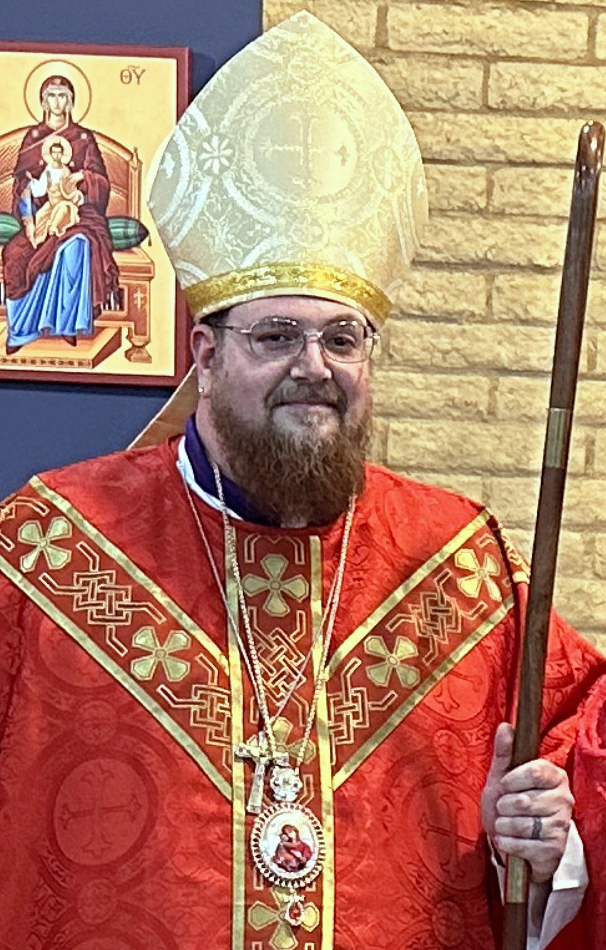
I was ordained into the Anglican priesthood in 2006 with a deep love for the sacramental life of the Church, the beauty of liturgy, the historic episcopate, and the ancient rhythms of Christian spirituality. I believed then, as I still believe now, that the Church at its best is meant to be a living sacrament of love in the world. I loved the Eucharist. I loved the Daily Office. I loved the poetry of incense, candlelight, vestments, bells, and ancient prayers whispered by generations long before me. I loved the idea that Christianity could be both intellectually serious and spiritually alive.
But over time, I also came to see the deep fractures within the institutional Church. I witnessed how often the mainline churches proclaimed inclusion publicly while quietly maintaining systems that still marginalized LGBTQIA2S people spiritually, sacramentally, and institutionally. Too many churches learned how to say “all are welcome” without ever surrendering power, theology, or culture in ways that actually made all people safe. Inclusion became branding instead of transformation.
By 2015, I could no longer continue participating in systems that often treated LGBTQIA2S people as theological discussions instead of beloved children of God.
Leaving the mainline churches was not a rejection of Christianity. It was not a rejection of sacramental theology, apostolic tradition, or the historic Church. Quite the opposite. It was a refusal to continue pretending that exclusion, hierarchy, institutional fear, and theological gatekeeping reflected the life and ministry of Jesus Christ. The deeper I studied scripture, Church history, the early Church, and the witness of Christ Himself, the clearer it became that the Gospel is fundamentally about liberation, healing, restoration, reconciliation, and radical belonging.
That journey eventually led me to Convergent Catholicism.
What drew me most deeply into Convergent Catholicism was that it refused to force me to abandon one stream of Christian spirituality in order to embrace another. I did not have to choose between sacramental theology and Spirit-filled worship. I did not have to choose between intellectual depth and mystical experience. I did not have to choose between ancient liturgy and social justice. I did not have to choose between fully including LGBTQIA2S people and remaining fully Catholic in spirituality and sacramental life.
Convergent Catholicism offered something that felt profoundly ancient and deeply future-oriented at the same time.
At its heart, Convergent Catholicism seeks to blend the essential streams of Christian life historically represented through Evangelical, Charismatic, and Sacramental traditions, while adding a fully affirming and inclusive theological foundation. It recognizes that the Church was never meant to exist as fragmented camps endlessly competing for theological dominance. Instead, the Church was meant to embody the fullness of the Gospel.
To say that Convergent Catholicism is affirming and inclusive means more than mere tolerance. It means truly believing that Christ’s love and ministry are open to all people regardless of denomination, race, class, gender, sexuality, political identity, or social standing. This was not simply a theological adjustment for me. It was a moral necessity.
I had seen firsthand the trauma inflicted upon LGBTQIA2S people by institutional Christianity. I had listened to stories of rejection, conversion therapy, shame, isolation, spiritual abuse, and despair. I watched people lose faith, not because they stopped seeking God, but because the Church convinced them that God had stopped seeking them.
And yet I knew in my soul that this could not possibly be the Gospel.
The Jesus I encountered in scripture consistently moved toward the wounded, the excluded, the stigmatized, and the rejected. Christ dismantled barriers. Christ restored dignity. Christ disrupted systems of purity and exclusion. The Incarnation itself is God crossing every boundary humanity ever created.
Convergent Catholicism gave me a framework where that truth was not treated as an uncomfortable side issue, but as central to the mission of the Church itself.
I was also drawn to Convergent Catholicism because it maintains a profound reverence for the sacramental and liturgical life of the historic Catholic and Apostolic Church. I never wanted to abandon the Eucharist, the Creeds, apostolic succession, or the beauty of liturgical worship. These things still nourish me deeply. They root me in mystery, continuity, and transcendence. But Convergent Catholicism understands that sacraments are not rewards for theological conformity. They are encounters with divine grace.
At the same time, Convergent Catholicism embraces the abiding presence of the Holy Spirit and the continuing gifts of the Spirit in the life of the Church. It leaves room for renewal, healing, prophecy, liberation, and spiritual experience that cannot always be contained neatly inside institutional structures.
And importantly for me, it remains deeply rooted in the Gospel itself. Not in culture wars. Not in empire theology. Not in fear. Not in purity politics. But in the actual evangelion, the Good News of Jesus Christ.
One of the most compelling aspects of Convergent Catholicism is its understanding that diversity within the Church is not a threat, but a gift. Some communities express convergence through richly sacramental liturgy. Others through charismatic worship. Others through evangelical simplicity rooted in weekly Eucharist and communal life. Yet all remain connected through shared commitment to inclusion, sacrament, Spirit, Gospel, and ancient continuity.
That flexibility matters.
Because human beings encounter God differently.
Some find God in silence and incense. Some in spontaneous prayer. Some in ancient chants. Some in ecstatic worship. Some in contemplative stillness. Some in justice work. Some in Eucharistic adoration. Convergent Catholicism recognizes that the Holy Spirit has always moved through many streams simultaneously.
Most importantly, I believe Convergent Catholicism offers one of the clearest paths forward for Christianity in the modern world. The old institutional models are collapsing under the weight of exclusion, rigidity, scandal, and fear. Younger generations are not rejecting spirituality. They are rejecting systems that preach love while embodying harm.
Convergent Catholicism has the potential to heal some of those wounds because it seeks not merely institutional survival, but transformation. It tears open the veils between traditions and calls the Church back toward a fuller embodiment of Christ.
For me personally, Convergent Catholicism became the place where I no longer had to fracture myself spiritually. I no longer had to choose between being sacramental and inclusive, mystical and intellectual, Catholic and liberative, ancient and evolving.
I could finally be whole.
And perhaps that is ultimately why I chose this path.
Not because it is trendy. Not because it is easy. Certainly not because it is institutionally powerful. But because I believe the future of Christianity depends upon communities courageous enough to embody both radical inclusion and deep spiritual rootedness simultaneously.
The Church does not need less mystery. It needs less exclusion.
It does not need less sacrament. It needs more compassion.
It does not need more certainty. It needs more love.
And I believe Convergent Catholicism, imperfect though any movement may be, points toward that future with courage, beauty, and hope.


Comments