
On the Integrity of Holy Orders & the Vocation of Women
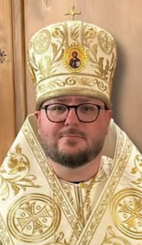

Beloved in Christ,
Grace and peace to you from the One who calls the Church into all truth. I write to you with a full heart in this season when the Spirit presses the Church to reckon again with its life, its memory, and its witness. Recent announcements from the Roman Communion regarding the question of women in the diaconate have stirred grief, concern, and prayerful resolve in many across the Catholic world.
The Vatican’s declaration that “there is still no room for a positive decision” about admitting women to the sacramental diaconate, coupled with the advisory commission’s conclusion that current research “excludes the possibility of proceeding,” signals yet another deferral for countless women who have carried a genuine vocation for decades. These words fall on the hearts of many as another unanswered plea. Another closed door. Another reminder that the Church, in some places, is still unwilling to see the gifts God has already given.
I write today not in anger, nor in triumph over another communion. I write as your pastor and Metropolitan, entrusted with guarding the conscience of our Communion and speaking plainly where silence would wound. We respect the Roman Church’s right to order its life. Yet we must also speak the truth we know: this refusal to recognize women in the diaconate is not consistent with the witness of Scripture, the practice of the early Church, or the movement of the Spirit in our time.
This letter is is also a word of comfort to many, a word of challenge to all, and a reaffirmation of who we are as Convergent Catholics.
The Church has wrestled with the role of women for two millennia. Women have preached, prophesied, governed households of faith, carried letters of Scripture, funded missions, instructed converts, and sustained the Church’s life in every generation.
When Paul commended Phoebe, a deacon of the church at Cenchreae, he named what already existed in the apostolic age. When he entrusted her with his letter to the Romans, he entrusted her with theology that would shape Christian history. The Church never recovered the full implications of that trust.
The centuries in which women served as deacons are not marginal or ambiguous. They belong to the Church’s memory. They belong to the Church’s tradition. They belong to the Church’s identity before later structures obscured them.
Thus, when any communion claims that the ordination of women is incompatible with apostolic faith, we must say plainly: the historical record does not support that claim. What it supports is a Church that once had the courage to ordain women, and must now rediscover that same courage.
We hold a deep love for our Roman Catholic siblings. Their discernment is theirs to make. Their house is theirs to tend. But love is not silent when the Body suffers. Love does not quietly watch a sister communion narrow what God has broadened.
Our disagreement is not rooted in modern sentiment. It arises from fidelity to the Gospel, reverence for the early Church, and the baptismal dignity that Christ Himself gave equally to women and men.
We cannot pretend that this teaching does not harm faithful women. We cannot pretend that this harm is justified by tradition, for tradition is richer than the argument that now suppresses it. And we cannot — we will not — allow another generation of women to believe they lack the authority to serve God because of something as incidental as gender.
This is why the Convergent Catholic Communion must speak, and speak clearly.
The mystery of baptism declares that in Christ there is no hierarchy of worth. No boundary on the call of the Spirit. No wall that keeps women on the margins of sacramental life.
The Church does not possess the Spirit. The Spirit possesses the Church.
The Church does not choose the shape of God’s call. The Church recognizes it.
Whenever we deny the vocation of those whom God has called, we fall into a subtle idolatry. We treat our own categories as more authoritative than the movements of the Spirit. We bind what Christ has not bound.
This is the same spiritual distortion we warned against in The Idolatry of a Nation, though its form here is different. In that letter, we named the danger of worshipping systems rather than the living God. Today, we must name the danger of worshipping inherited boundaries rather than the Giver of vocations.
From our founding, our Constitution has declared that all people shall have equality of access and opportunity in the Church, free from discrimination on grounds of gender. We do not make this claim as an innovation. We make it as an act of fidelity.
Fidelity to Scripture.
Fidelity to the early Church.
Fidelity to the Spirit’s work in our own communities.
We have ordained women because we have seen women bear the fruits of ordained ministry. We have ordained women because we trust the Spirit more than cultural habit. We have ordained women because we refuse to enshrine inequality in the name of God.
We are not perfect. But we are committed. And we will not waver.
The Convergent Catholic Communion will continue to ordain women to the diaconate, presbyterate, and episcopacy. We will continue to form them, honor them, and lift their voices. We will continue to bear witness — humbly but boldly — to a Catholicism that is both ancient and alive.
To every woman who has heard the Holy Spirit whisper a vocation that your community refuses to see.
To every woman told her call is impossible.
To every woman who carries the ache of a delayed or denied ministry.
Hear me as your brother in Christ: your call is real.
The Spirit who formed you has placed gifts within you that no institution can erase. Some of you have waited decades for your Church to say yes. Some of you have served unofficially, carrying the weight and responsibility of ordained ministry without the recognition of it. Some of you have wondered whether the Church would ever make space for you.
There is space for you here. Bring your questions. Bring your discernment. Bring your hope. Bring your wounds.
If you feel God drawing you toward our Communion, we will walk with you not to recruit, but to recognize. Not to seize what another communion has denied, but to let the Spirit’s work in you be seen.
This invitation extends to all who have been marginalized in the pursuit of ministry, not only women. The fields needs laborers, and the Spirit pours out gifts without partiality.
I ask every community in our Communion to pray, teach, and speak in ways that make space for the recognition of women’s vocations across the broader Catholic world. We must resist any temptation to bitterness or superiority. Our witness must be grounded in humility, love, and unwavering clarity.
Let us pray for our Roman Catholic siblings. Let us pray for open hearts, open histories, and open futures. Let us pray that all communions - ours included - will continue to reform our lives so that they reflect the breadth of Christ’s mercy and the freedom of the Spirit.
Beloved, this letter is born from pastoral concern and ecclesial responsibility. It is not a rebuke of Rome. It is a confession of our own conscience. It is a reaffirmation of our identity. It is a proclamation that the Spirit is still teaching the Church how to honor the dignity of all God’s people.
May the Holy Spirit, who overshadowed Mary and empowered Phoebe, guide the Church toward a future where no vocation is dismissed because of gender.
May the prayers of St. Phoebe, St. Junia, St. Mary Magdalene, and all holy women strengthen us in hope.
And may the peace of our Lord Jesus Christ anchor us as we continue this work for the sake of His Body.
With deep affection and steady resolve,
✠ Metropolitan John Gregory
Primus of the Convergent Catholic Communion


Comments