
Re: Executive Order has been issued by the White House titled “Ending Crime and Disorder on America’s Streets.”
- Metropolitan John Gregory
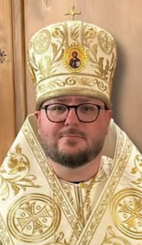
- Dec 12, 2025
- 5 min read

21 January 2025
To the beloved communities of the Convergent Catholic Communion -
in our cities and countryside, in grief and in grace:
A new Executive Order has been issued by the White House titled “Ending Crime and Disorder on America’s Streets.” It describes our urban centers as overrun by vagrancy, addiction, and violence. It names over 274,000 people sleeping on the streets, the highest number ever recorded, and states that “the overwhelming majority” of these individuals are suffering from addiction or mental illness. In response, the government promises stronger enforcement: clearing encampments, criminalizing public camping and loitering, reducing support for harm reduction programs, and increasing civil commitments into institutional care.
It also says this: “Surrendering our cities and citizens to disorder and fear is neither compassionate to the homeless nor other citizens.”
That statement carries weight. No one, not parent nor pastor, wants to see their neighborhood become a place of chaos.
But I want to hold that statement up to the light of Christ, and ask: what is compassion? What is justice? And whose peace are we pursuing?
As your Primus, I’ve walked long enough with the poor, the addicted, and the wounded, in urban backstreets and rural hollows alike, to know that easy answers are dangerous. And quick solutions, when shaped by fear or politics, often cause more harm than help.
So I offer this reflection as a fellow pilgrim and as a shepherd committed to the truth of the Gospel and the dignity of every human life.
I. Safety Is a Moral Good - But It Cannot Be Bought with Human Dignity
We all long for safety. And rightly so. Every child deserves to walk to school without fear. Every grandmother should be able to sit on her porch without flinching at sirens or stray bullets. Every shopkeeper, bus driver, street preacher, and elder out for a morning walk deserves peace.
Order is not the enemy of compassion. But order becomes a tool of cruelty when it is wielded without mercy.
When we speak about “clearing the streets” or “restoring order,” we must never forget that we are talking about people.
Not threats. Not trash. Not statistics. People.
Many of the people targeted in this order, the ones referred to as “vagrants,” are our neighbors. Some are veterans with untreated trauma. Some are youth rejected by their families for being queer. Some are mentally ill elders with no remaining family. Others are mothers escaping abuse or fathers who lost everything after one injury, one bad break, one jail sentence too many.
Let me say this plainly: No one is disposable.
The Gospel does not divide the world into “productive citizens” and “troublemakers.”
Jesus never walked past a man shouting on the street corner. He never condemned the woman whose past was tangled in scandal. He never stepped over the sick or poor just to keep the peace.
He stopped. He listened. And He loved with truth and with tenderness.
That must be our posture, too.
II. Compassion and Accountability Are Not Opposites
The state has a role to play in protecting life and property. When done rightly, that work is holy.
But when enforcement becomes punishment without path, or control without care, it strays from justice.
Involuntary commitment for the severely mentally ill can be a mercy but only if it leads to real treatment, safety, and healing.
If it’s just containment, it becomes cruelty.
Removing encampments can be necessary for public safety but only if those removed are offered better than a patch of sidewalk. A bed. A roof. A pathway forward. If there is nowhere for them to go, we’ve simply moved their suffering out of sight.
I understand the anger many feel. I’ve heard it from families, store owners, and clergy.
But anger must be rooted in love, or it turns into vengeance.
Enforcement without restoration is not justice.
It’s fear in a uniform.
We need partnerships - between law enforcement, community leaders, housing advocates, and mental health workers.
We need accountability - yes - but also imagination.
We need to stop asking only “How do we get them off the streets?” and start asking “What would it take for them to belong again?”
III. We Must Address the Root, Not Just the Rot
This Executive Order blames “failed programs” for the state of our streets. And it’s not wrong to ask whether billions of dollars have been spent wisely. But the real root isn’t programs. It’s neglect.
We have neglected housing. We have neglected mental health care. We have neglected the poor — not with hostility, but with indifference.
A person sleeping on the sidewalk doesn’t need a criminal record.
They need a home. They need someone to see them.
In both our cities and our rural towns, the reality is this: when mental illness strikes, when addiction takes hold, when a paycheck is missed or a family fractures - the net that should catch people is torn.
Churches have a role here. So do nonprofits. But this is not just about charity. It’s about the moral obligation of a society. A society that can fund wars and tax breaks can fund beds and clinics.
Let us be clear:Criminalizing homelessness without solving the housing crisis is like blaming the patient for the symptoms.
IV. Grief, Anger, and Hope Can All Be Held at Once
Some will say we must choose between compassion and public safety.
They are wrong. We can and must protect our neighborhoods and preserve human dignity. We must weep for the person assaulted on their way home and for the person passed out in withdrawal on the curb.
We must be angry at the violence tearing through our streets and at the silence that has allowed so many to suffer without help.
We must hold hope that the addict can recover, the mentally ill can be restored, and the broken systems can be rebuilt.
This is the Christian tension. To lament. To act. To hope.
V. A Call to Action
I invite all our ministries, orders and parishes, to set aside a day for Prayer and Discernment for Public Peace.
Let us pray for those on the margins. For those in uniform. For those sleeping on pews and pavement alike. Let us host forums to hear stories from victims, officers, social workers, and the homeless themselves. Let us name the pain and then ask what the Spirit requires of us.
And then, let us act:
Partner with shelters.
Support housing initiatives.
Preach about justice and mercy in equal measure.
Teach our children that safety and solidarity can coexist.
Call on our local leaders to pursue real solutions, not political posturing.
Closing Word
The order from the White House begins with fear. Let us, instead, begin with love. Not soft love. Not sentimental love. But Gospel love. The kind that flips tables in the temple and kneels to wash the feet of the poor.
We follow a homeless Messiah. We serve a crucified King.
And we believe that the broken can be healed not by force, but by truth, grace, and the fierce, patient work of justice.
So no, we do not “surrender our cities to disorder.” But neither do we surrender our Gospel to fear.
Let us choose a better way. The way of Christ.
In His mercy,
✠ Metropolitan John Gregory
Primus of the Convergent Catholic Communion


Comments