
AT THE CROSSROADS OF MEMORY AND LIGHT
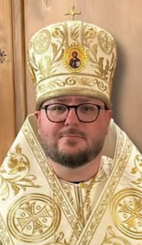
There is something fitting about beginning this stretch of the Church year beneath the Cross.
On September 14 we celebrate the Triumph of the Life-giving Cross. In our Convergent Lectionary, this feast also opens Creationtide. The Cross stands before us not only as an instrument of suffering but as the Tree of Life. From there we walk through creation, the communion of saints, the witness of reformers, and eventually into the long expectation of Advent. By the time we reach the feast of St. Lucy, whose very name calls to mind light, the Church has traveled quite a distance.
So have many of us.
These months carry us through harvest and shortening days. They bring remembrance of the dead. They carry us through Thanksgiving tables, changing seasons, family gatherings, loneliness, expectation, and the first signs of Christmas.
The Church does something important in the middle of all this.
She keeps telling the story.
Not because we have forgotten the facts.
Because we are still learning how to live them.
And somewhere in this stretch from Cross to light, I think we find something important about what it means to be Convergent Catholic.
We Are Not Building Christianity From Scratch
Convergent Catholicism did not begin because somebody decided two thousand years of Christianity needed to be replaced.
We are Catholics.
We confess the ancient Creeds. We celebrate the Holy Mysteries. We receive the historic episcopacy. We gather around Word and Table. We pray with the saints. We baptize in the name of the Triune God. We believe Jesus Christ is crucified, risen, and Lord.
Our Communion describes itself as Affirming, Sacramental, Evangelical, and Charismatic. Those are not four departments competing for space. They describe four currents of Christian life meeting in one ecclesial body.
We are sacramental because grace takes flesh.
We are evangelical because the Gospel is still good news meant to be proclaimed.
We are charismatic because the Holy Spirit did not retire after Pentecost.
We are affirming because we have seen the fruits of that same Spirit in people whom parts of the Church were too willing to reject.
None of those commitments makes much sense without the others.
Sacrament without Gospel becomes ceremony.
Evangelism without sacrament risks becoming words detached from a worshiping people.
Charismatic life without discernment loses its grounding.
Affirmation without the deeper Christian story risks becoming little more than hospitality with religious language attached.
Convergence asks more of us.
It asks us to hold these things together.
That is harder than choosing one stream and pretending the others have nothing to teach us.
It is also deeply Catholic.
Catholicity has never meant that every Christian prays alike, thinks alike, dresses alike, or carries the same theological accent. Catholicity means wholeness. It means receiving a faith larger than our preferences.
That is the Church we are trying to become.
Not a Church without convictions.
A Church whose convictions are strong enough to encounter another person without fear.
Scripture Is Not a Weapon
One of the places this identity becomes clearest is in how we approach Holy Scripture.
We believe Scripture is inspired. We proclaim it publicly. We chant it, preach it, study it, pray it, and return to it again and again.
Yet we do not believe reverence for Scripture requires pretending the Bible fell from heaven already bound, translated into English, and detached from history.
Scripture came to us through human authors, languages, cultures, communities, arguments, poetry, memory, suffering, hope, and prayer.
That does not make Scripture less sacred.
It helps us listen more carefully.
In my book, The Convergent Catholic Companion, I describe Scripture as sacred witness to the unfolding relationship between God and humanity. It insists that we read the biblical texts according to their genre, context, place within the whole scriptural story, and ultimately through Jesus Christ.
This matters.
A verse is not faithful simply because somebody quoted it.
Christians have quoted Scripture to defend slavery.
Christians have quoted Scripture against women.
Christians have quoted Scripture while defending segregation, colonialism, violence, antisemitism, and the exclusion of LGBTQIA+ people.
The problem was not Scripture.
The problem was interpretation.
Jesus himself interpreted Scripture. The apostles interpreted Scripture. The Fathers and Mothers of the Church interpreted Scripture. Every preacher standing behind a pulpit interprets Scripture.
So the question has never been whether we interpret.
The question is whether we interpret faithfully.
For Convergent Catholics, Christ stands at the center.
We ask what a text meant within its own story. We listen to how the Church has received it. We take scholarship seriously. We look at its fruit.
And we keep returning to Jesus.
Does our reading make us more capable of loving God and neighbor?
Does it lead toward mercy, justice, reconciliation, holiness, and truth?
Does it sound like the One who touched lepers, ate with sinners, confronted religious hypocrisy, forgave enemies, welcomed children, and gave himself rather than demanding somebody else be sacrificed for his security?
Those questions do not weaken biblical authority.
They make us accountable to it.
Tradition Is a Living Inheritance
We also refuse the false choice between tradition and change.
Tradition matters.
We did not invent the Trinity.
We did not invent the Eucharist.
We did not invent baptism, the communion of saints, apostolic ministry, the Creeds, the liturgical year, or the conviction that Christ is fully human and fully divine.
We received these things.
We are stewards before we are innovators.
Yet stewardship does not mean freezing Christianity at some preferred century.
The tradition itself developed through prayer, controversy, councils, mistakes, repentance, encounter, and the patient work of the Holy Spirit.
Our Companion makes an important distinction between the great Tradition of the apostolic faith and the many traditions Christians have developed around it. Not every inherited practice carries equal weight. Some things belong to the heart of Christian confession. Other things have changed many times and will change again.
Convergent Catholicism lives within that tension.
We look backward with gratitude without pretending the past was perfect.
We listen forward without assuming everything new is progress.
We receive.
We test.
We discern.
We reform.
That is why a Sunday honoring the Reformers belongs comfortably within our calendar alongside saints, sacraments, councils, and ancient feasts.
Reformation is not the enemy of catholicity.
Sometimes reformation is what fidelity requires.
God Gave Us Minds
Reason also belongs in this conversation.
Faith does not require intellectual dishonesty.
We do not need to fear science, history, psychology, archaeology, medicine, or serious scholarship because truth is not God's enemy.
If our theology collapses whenever we learn something new about creation or human beings, our problem is not knowledge.
Our theology was too small.
Reason helps us ask better questions.
What kind of text are we reading?
What was happening historically?
What do we know now that earlier generations did not know?
What are the likely consequences of our choices?
Are we being internally consistent?
Are we defending something because it is truly part of the faith or because we are familiar with it?
Reason does not replace revelation.
Reason helps us receive revelation responsibly.
The mind is not an obstacle to faith.
The mind is one of the gifts we bring to God.
Experience Must Have a Voice
Then there is experience.
This is sometimes the part people misunderstand most.
Experience does not mean, “I feel this, therefore God said it.”
Our personal feelings are not infallible.
Neither are bishops.
Neither are theologians.
Neither are institutions.
Experience matters because Christianity makes claims about what grace does in actual human lives.
If we say Christ heals, we ought to listen to wounded people.
If we preach liberation, we ought to listen to people living under oppression.
If we speak about women, we ought to listen to women.
If we make theological claims about LGBTQIA+ people, we ought to listen to LGBTQIA+ Christians.
If we claim our churches are welcoming, we ought to ask people who walked through our doors whether they experienced welcome.
Our Companion argues that lived experience, especially the experience of people pushed to the margins, belongs within the Church's discernment. Not by itself. Not above Scripture. But in conversation with Scripture, Tradition, and Reason as the Church listens for the Spirit.
This is one reason Convergent Catholicism is affirming.
Our affirmation did not require us to throw the Bible away.
It required us to read more deeply.
It required us to listen.
It required us to examine the fruit.
And it required us to admit where Christian interpretation and practice had wounded people whom Christ never stopped loving.
This Is What Convergence Looks Like
Perhaps convergence is best understood not as a theological formula but as a discipline.
We refuse easy binaries.
Ancient or modern.
Catholic or evangelical.
Mystery or intellect.
Order or Spirit.
Tradition or reform.
Reverence or justice.
Word or Sacrament.
We have inherited too much from the whole Church to accept such small choices.
Our lectionary itself reflects this instinct. It draws from Eastern and Western calendars, the breadth of the biblical canon, Catholic and Reformed inheritance, saints, reformers, creation, justice, and the rhythm of Christ's life. Its purpose is not novelty. Its stated goal is formation. We dwell within the story of God until the story begins to dwell within us.
That is the point.
Convergence is not collecting interesting Christian things.
Convergence is what happens when those streams begin forming a people.
A people reverent enough to kneel.
Free enough to raise their hands.
Educated enough to ask hard questions.
Humble enough to admit when they were wrong.
Catholic enough to remember the saints.
Reformed enough to repent.
Evangelical enough to tell somebody about Jesus.
Sacramental enough to recognize Jesus in bread, wine, water, oil, creation, and neighbor.
Charismatic enough to expect the Spirit to speak.
Affirming enough to believe nobody needs to become less fully themselves before approaching Christ.
And mature enough to know that welcome is only the beginning of discipleship.
From the Cross Toward the Light
So we begin this season beneath the Cross.
Not a cross of domination.
Not a weapon in a culture war.
The life-giving Cross.
The place where divine love enters human violence and refuses to return violence for violence.
From there Creationtide teaches us to see the whole world as gift.
The saints remind us we did not begin this journey.
The reformers remind us the Church is never beyond correction.
Advent teaches us to wait.
And Lucy reminds us to keep carrying light while the nights grow longer.
There is a word for a Church willing to live all of this together.
Convergent.
Our task now is not simply to defend that word.
Our task is to become worthy of it.
To read Scripture faithfully.
To receive Tradition gratefully.
To use Reason courageously.
To listen to Experience humbly.
To celebrate the sacraments reverently.
To proclaim Christ openly.
To seek justice stubbornly.
To welcome generously.
To repent when necessary.
And through all of it, to keep coming back to the Table.
Because convergence is finally not about creating a clever form of Christianity.
It is about becoming whole.
Whole enough to carry what the Church has given us.
Whole enough to face what the Church has gotten wrong.
Whole enough to hear what the Spirit is saying now.
Whole enough to walk together without requiring sameness.
Whole enough to keep Christ at the center.
From the Cross to the light, that is our work.
And by the grace of God, it is also our hope.


Comments