
VICARS OF CHRIST CANNOT BE BYSTANDERS
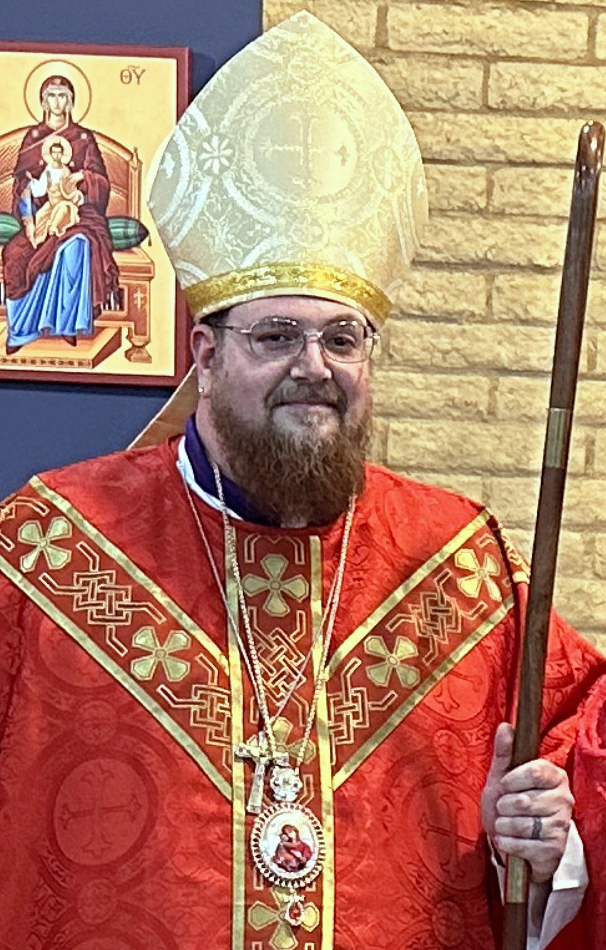
Now, more than ever, clergy need to remember what the word vicar actually means.
A vicar is one who stands in the place of another, one who represents another. So if we dare to call ourselves vicars of Christ, whether or not our particular tradition actually uses the title, we are making a rather audacious claim: that when we put on the collar, stole, cassock, alb, chasuble, or whatever ecclesiastical outfit we have decided makes us look sufficiently holy, we intend to represent Jesus. And that comes with consequences. Because Jesus was not neutral. Jesus did not wander around first-century Palestine offering vaguely inspirational thoughts while carefully avoiding controversial subjects.
He proclaimed good news to the poor, liberation to the captive, sight to the blind, and freedom to the oppressed. He touched people society considered untouchable. He ate with people respectable religion considered unacceptable. He challenged religious authorities, confronted economic exploitation, crossed ethnic and social boundaries, and eventually managed to irritate both religious power and imperial power enough to get himself executed.
So perhaps Christianity was never supposed to be particularly good for our reputations. The history of the Church, at its best, remembers this.
St. Basil the Great thundered against wealthy Christians who hoarded resources while their neighbors went hungry. St. John Chrysostom preached so relentlessly about wealth, poverty, and injustice that powerful people eventually decided he would be considerably more pleasant from a distance. St. Francis of Assisi rejected the security of wealth and chose solidarity with those society discarded. In the nineteenth century, Harriet Tubman understood liberation not as an abstract theological concept but as something requiring courage, risk, movement, and occasionally breaking unjust laws.
In the twentieth century, Archbishop Óscar Romero discovered that preaching the Gospel in the midst of oppression meant naming the oppression. Dietrich Bonhoeffer understood that Christian discipleship under fascism could not consist merely of maintaining beautiful worship while the machinery of death operated outside the church doors. And the Rev. Dr. Martin Luther King Jr. repeatedly reminded white clergy that the great obstacle to justice was not simply the obvious racist, but the religious moderate who preferred order to justice and kept suggesting that oppressed people wait for a more convenient season.
Apparently, “Now really isn’t the right time” has been a church tradition for quite a while. But the Gospel keeps insisting that the time is now.
Social justice is not an optional extracurricular activity for clergy who happen to be politically inclined. It flows directly from our vocation. If we proclaim that every human being bears the image of God, then we must show up when that image is demeaned. If we proclaim that Christ identifies himself with the hungry, imprisoned, stranger, sick, and poor, then we cannot spend Sunday preaching Matthew 25 and Monday pretending we have never met those people.
And showing up matters.
Showing up at the protest.
Showing up at the school board meeting.
Showing up at the legislature.
Showing up when immigrants are threatened, when LGBTQIA2S people are targeted, when racism is dressed up as public policy, when disabled people are treated as expendable, when Indigenous communities are ignored, when women lose autonomy, when children are used as political props, and when poverty is treated as a character defect rather than a collective moral failure.
The collar should occasionally leave the sanctuary.
Because at this point, silence is not neutrality.
Silence provides shelter for the powerful.
There was perhaps a time when clergy could convince ourselves that remaining quiet kept us “above politics.” That luxury is gone. When human dignity itself becomes politically contested, refusing to speak does not make us impartial. It makes us useful to those doing the harm.
Bonhoeffer warned against merely bandaging the victims beneath the wheel without confronting the wheel itself. That remains the challenge of ministry.
Yes, feed people.
Yes, visit the sick.
Yes, bury the dead.
Yes, comfort the grieving.
And then ask why so many people are hungry, abandoned, frightened, incarcerated, deported, marginalized, or dying unnecessarily.
Charity treats the wound.
Justice asks who keeps holding the knife.
If we are going to claim the extraordinary privilege of standing at altars, preaching Gospel, blessing people, baptizing children, burying beloved dead, and speaking publicly in the name of Christ, then we must also accept the uncomfortable responsibility that comes with it.
We must show up.
Not because we are Democrats.
Not because we are Republicans.
Not because we enjoy controversy.
But because we are Christians.
Because our Lord consistently walked toward the people everyone else was walking away from.
And if we call ourselves vicars of that Christ, eventually we have to follow him.
Otherwise, the collar is just jewelry.


Comments